
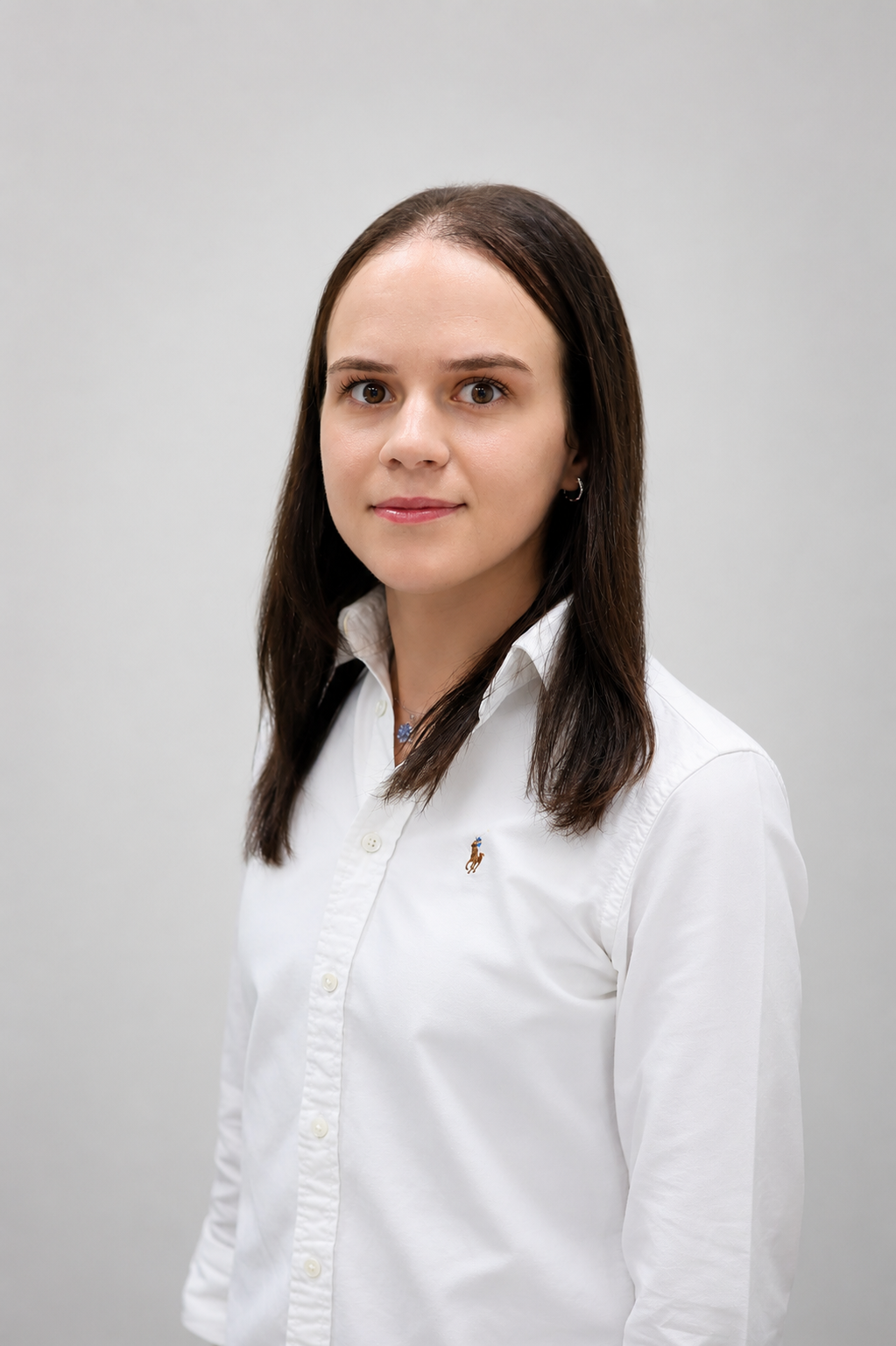
Rawan Ibrahim
Project
Soft and adhesive neuronal implant
Host institution
Tel Aviv University
PI
Prof. Yael Hanein
INTERVIEW
Can you describe your educational and professional background?
I am Rawan Ibrahim, a biomedical engineer working on neural interfaces. I completed my B.Sc. and M.Sc. in Biomedical Engineering at Tel Aviv University, both with honors, and I am now a doctoral candidate in the School of Electrical and Computer Engineering, in Prof. Yael Hanein’s group. Before and during my graduate studies, I worked as a research assistant on wearable EMG and exercise physiology, as an R&D engineer at a medical-device startup, and as a supervisor of undergraduate engineering projects. Along the way, I built expertise in electrode characterization, electrophysiological signal processing, and computational modeling, work that has produced peer-reviewed publications across facial EMG, wearable neuromodulation, and dry-printed electrodes. Working alongside sport physiologists, surgeons, and clinical researchers taught me that the hardest part of translational research is often not technical: It is framing a problem so that someone from a different field can act on it.
What prompted you to apply as a doctoral candidate within the Doctoral Network?
First, the science was an exact fit: the project sits at the intersection of my interests and the expertise I built during my studies, and it lets me keep working on the problem I care about most, building neural interfaces that living tissue actually accepts. Beyond the science, the network offers what a single lab cannot: A European community working on the same hard problem from different angles, with secondments and training built to turn those interactions into real progress. The secondments in particular will push me beyond the bench, toward how neurotechnology is funded, translated, and delivered to the patients it is meant to serve. That wider view is something I want to develop early, not treat as an afterthought.
What does your research consist on?
Neural interfaces that communicate reliably with living tissue remain one of the defining challenges in biomedical engineering. It is not enough for an electrode to work; it has to conform to the mechanical and biochemical reality of the tissue and maintain stable, low-impedance contact without provoking a response that degrades the signal over time. The research focuses on developing soft, adhesive neuronal interfaces that address this at the interface itself, with retinal applications as the target. Hosted at Tel Aviv University under Prof. Yael Hanein, the work is now moving toward human-subject testing of non-invasive retinal stimulation with dry electrodes, with the responses characterized using objective measures. Alongside the experiments, computational modeling predicts how stimulation targets and evokes the intended responses.
More information on NeuroNanotech
This Programme is supported by the Marie Skłodowska-Curie Actions (MSCA) Doctoral Networks. Grant agreement ID: 101169352.