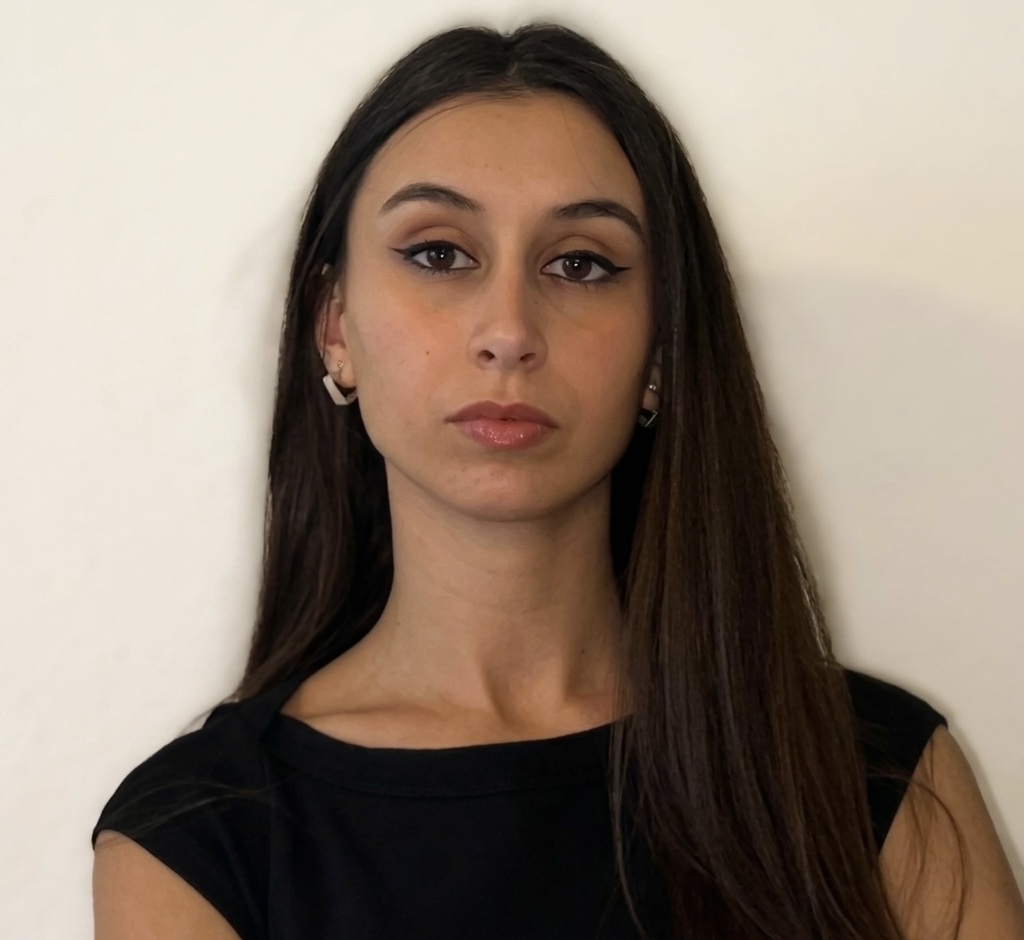
Marina Castrillo Fernández
Project
Development of flexible interfaces for neural electric stimulation based on nanostructured electrodes
Host institution
IMDEA Nanociencia
PI
Dr. Teresa González / Dr. Isabel Rodríguez
INTERVIEW
Can you describe your educational and professional background?
Hello! I am Marina Castrillo Fernández, a Biomedical Engineer passionate about addressing unmet clinical needs through engineering, always motivated by the goal of improving the lives of people with neurological disorders.
After graduating from Rey Juan Carlos University, I pursued a Master’s Degree in Nanoscale Engineering through a joint program among INSA Lyon, École Centrale de Lyon, and Université Claude Bernard Lyon 1. My research experience spans Spain, an Erasmus stay in Italy, France, and Canada, supported by the Mitacs Globalink Research Award. This has given me an adaptable, multicultural perspective and allowed me to develop expertise in electrode development, neural signal analysis, and electrochemical characterization, both in clinical hospitals and in nanotechnology laboratories.
What prompted you to apply as a doctoral candidate within the Doctoral Network?
I applied to the NeuroNanotech MSCA Doctoral Network because it provides the optimal framework to translate engineering solutions into clinical applications. I was particularly attracted to the network’s specific focus on neural interfaces, a field I have long been interested in contributing to, and its environment where engineering, neuroscience, and nanotechnology converge to address this medical challenge.
Additionally, I appreciate the program’s international and multidisciplinary structure. The opportunity to collaborate with diverse research groups and industry partners facilitates learning from leading experts, integrating different ways of working, and broadening both my scientific and personal perspectives.
What does your research consist on?
My research focuses on a critical challenge in treating neurological disorders: current implantable electrodes often fail over time due to size limitations, restricted biocompatibility, and a mechanical mismatch with neural tissue.
To solve this, I develop flexible neural interfaces coated with vertically aligned metallic or polymeric nanowires. Using nanofabrication techniques, such as sputtering, photolithography, and nanoimprint lithography, I aim to reduce impedance, increase the electrochemical surface area, and improve the mechanical and biological compatibility with neural cells.
The project includes electrical and mechanical characterization under physiological conditions, in vitro biocompatibility and stimulation studies, and in vivo validation of the interfaces.
More information on NeuroNanotech
This Programme is supported by the Marie Skłodowska-Curie Actions (MSCA) Doctoral Networks. Grant agreement ID: 101169352.